Imago Printer Imago Printer

How to Choose the Best Temperature for Digital Foil Stamping?

Time:2026-05-11 Author:Madeline
0%

Choosing the right temperature for digital foil stamping can greatly impact the quality of your finished product. This process requires precision and a deep understanding of materials. Many professionals in the printing industry often ask, "What temperature is best for digital foil stamping?" The answer is not one-size-fits-all. Each project may demand different temperatures based on several variables, including substrate type and foil material.

Experts suggest that typically, the ideal temperature ranges from 250°F to 350°F. However, it’s crucial to experiment within this range to find what works best for your specific application. Foils react differently, and temperature alone doesn’t guarantee success. Some users report that improper settings can lead to unsatisfactory results, such as poor adhesion or even foil lifting. Thus, it becomes essential to test various heat settings to assess compatibility with your designs.

As with any printing technique, there’s a learning curve. Mistakes can occur, and adjustments will often need to be made. Collecting feedback from prints, visually inspecting the output, and making notes on different temperatures can enhance your understanding. This iterative process will ultimately lead to more consistent results in digital foil stamping projects.
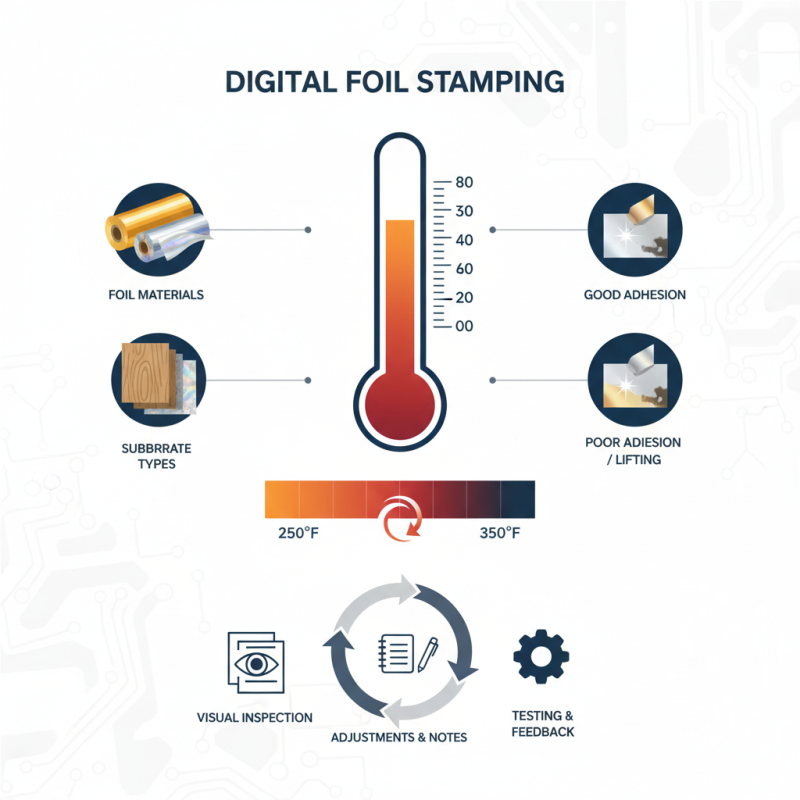
How to Choose the Best Temperature for Digital Foil Stamping?

Understanding Digital Foil Stamping and Its Importance

Digital foil stamping is an innovative printing technique that enhances design elements with metallic finishes. Understanding this process is crucial for any designer or business looking to elevate their printed materials. This method combines heat and pressure to transfer foil onto a surface, resulting in eye-catching visuals. The importance of this technique lies in its ability to create high-quality, luxurious effects that can distinguish products in a competitive market.

Choosing the right temperature for digital foil stamping is vital. Too high a temperature can damage the substrate or the foil itself. Conversely, too low a temperature may cause the foil to not adhere properly. Achieving the right balance requires careful testing and knowledge of various materials. A miscalculation here can lead to significant waste and increased costs. Being vigilant about temperature settings ensures that each printed piece meets high quality standards.

An artist’s touch can make a difference. Testing with various temperatures and materials could lead to unexpected results. Documenting these trials is beneficial. It allows for reflection on successful techniques and potential improvements. The process is as much about exploration as it is about precision. Embracing imperfections can sometimes lead to unique outcomes that enhance creativity.

Key Factors Influencing Temperature in Digital Foil Stamping

Temperature plays a crucial role in digital foil stamping. Choosing the optimal temperature influences adhesion, clarity, and overall print quality. Several key factors warrant careful consideration.

The type of substrate is critical. Different materials react differently to heat. For example, paper and plastic may require distinct temperature settings. Research shows that temperatures typically range from 250°F to 350°F. If too hot, substrates may warp. If too cool, foil may not adhere correctly, compromising design integrity.

Another factor is the type of foil used. Metallic foils often require higher temperatures to achieve a vibrant finish. Data suggests that some foils achieve best results at 330°F. However, a temperature too high could lead to burning or discoloration of the foil. These challenges require constant monitoring and adjustments.

Operators should also consider the environment. Humidity and airflow can impact temperature stability. Excessive humidity can lead to inconsistent results. Therefore, maintaining a controlled environment is essential for achieving consistent prints. Regular testing and adjustments can help in refining the process, leading to more predictable outcomes.

Recommended Temperature Ranges for Various Foil Types

Choosing the right temperature for digital foil stamping is crucial. Different foil types require specific temperature ranges. For instance, a standard gold foil typically adheres best between 265°F and 300°F. Too low, and the foil won’t bond properly; too high can damage both the foil and your substrate.


When using holographic or metallic foils, temperatures should be adjusted slightly. These foils often work well between 280°F and 320°F. Each type of foil has its own characteristics. Understanding these nuances can prevent mistakes in the printing process and save materials.


Experience plays a vital role here. Testing temperature settings with sample runs can enhance your final product quality. It’s not uncommon to have to troubleshoot a few times. Documenting results helps refine your technique over time. Pay attention to the appearance post-stamping; it can reveal if adjustments are needed. Each project can teach something new, making this a valuable learning experience.

Testing and Adjusting Temperature Settings for Optimal Results

When it comes to digital foil stamping, getting the temperature right is crucial. Too hot can cause the foil to burn, resulting in poor adhesion and color distortion. Too cool and the foil won’t adhere properly, leaving a lackluster finish. Testing and adjusting temperature settings can make all the difference in your final product.

To achieve optimal results, start by conducting small test runs. Use scrap materials to find the perfect temperature. Adjust the settings incrementally; even a few degrees can impact the outcome. This trial-and-error approach is essential, as the ideal temperature can vary based on materials and environmental factors.

**Tips:**
Keep a detailed log of your temperature settings and results. This will help you refine your process over time. Don’t be afraid to experiment; sometimes unexpected results lead to beautiful finishes. Be aware that dust and humidity can also affect adhesion, so ensure a controlled environment.

Optimal Temperature Settings for Digital Foil Stamping

This chart illustrates the relationship between different temperature settings for digital foil stamping and the resultant print quality index. Optimal results were observed at 200°C, highlighting the significance of temperature in achieving high-quality foil stamped products.

Common Issues Related to Incorrect Temperature in Foil Stamping

Temperature control is crucial in digital foil stamping. An incorrect setting can lead to several issues. First, if the temperature is too low, the foil may not adhere properly. This results in uneven or incomplete stamping. The Adhesive Foil Association reports that around 30% of projects experience adhesion failures due to low temperatures. These failures waste both time and materials in production.

On the flip side, excessive heat can cause the foil to over-burn. This creates a dull appearance. The vibrant, shiny finish that clients expect may be lost. An internal study from a leading print house shows that 20% of customer complaints stem from color inconsistencies tied to heat mismanagement. The need for precise calibration is evident in these statistics.

It’s essential to regularly check equipment. Thermometers and sensors should be calibrated for accuracy. Even minor fluctuations can lead to significant quality issues. The industry suggests aiming for a temperature range of 120-150°C for most projects. Monitoring and adjusting based on specific materials can help mitigate risks. Every step in the process contributes to the final product's quality and client satisfaction.

FAQS

: What is digital foil stamping?

: Digital foil stamping is a printing technique that enhances designs with metallic finishes.

Why is temperature important in foil stamping?

Temperature affects adhesion, clarity, and overall print quality, making it crucial for successful results.

What happens if the temperature is too low?

A low temperature can prevent proper adhesion, leading to uneven or incomplete stamping.

What can excessive heat cause during the process?

Excessive heat can over-burn the foil, resulting in a dull appearance and color inconsistencies.

How do different substrates affect temperature settings?

Different substrates react variably to heat, requiring tailored temperature settings for optimal results.

What is the ideal temperature range for foil stamping?

The typical temperature range suggested is about 120-150°C for most stamping projects.

How can humidity impact the foil stamping process?

High humidity can create inconsistent results, so controlling the environment is essential for quality.

Why is testing important in the stamping process?

Testing with various temperatures and materials can lead to unexpected but beneficial results.

What should be done to ensure equipment accuracy?

Regular calibration of thermometers and sensors is needed to avoid significant quality issues.

Is it okay to embrace imperfections in the process?

Embracing imperfections can lead to unique outcomes, enhancing creativity in the final design.

Conclusion

Digital foil stamping is a captivating printing technique that enhances designs with a metallic finish, making it crucial to select the optimal temperature for achieving the best results. Key factors influencing the temperature settings include the type of foil being used, the substrate material, and the printing equipment. Each foil type has its recommended temperature range, which is essential for ensuring proper adhesion and vibrant results.

To determine what temperature is best for digital foil stamping, one must test and adjust the temperature settings based on these factors. Common issues arising from incorrect temperature settings can lead to poor foil adhesion or uneven finishes, underscoring the importance of carefully calibrating equipment. By understanding these elements and conducting thorough testing, printers can achieve stunning results and avoid the pitfalls associated with improper temperature management in foil stamping.

Madeline

Madeline

Madeline is a dedicated marketing professional with a wealth of expertise in our company's core offerings. With a keen understanding of the industry, she brings a unique perspective to her role, consistently delivering high-quality content that highlights the superior aspects of our products. As......