In the world of printing, a critical question often arises: "Why is digital printing better than traditional silk screen?" Digital printing is gaining popularity for various compelling reasons. It offers efficiency and flexibility that traditional methods struggle to match. This modern approach employs advanced technology, allowing for quick turnaround times and vivid color reproduction.
Unlike silk screen printing, which often relies on numerous screens and setup time, digital printing simplifies the process. This makes it ideal for small runs or highly customized projects. Print quality remains a key advantage, as digital printing captures intricate details with precision. Additionally, it requires less material waste, which is a growing concern in today's environmentally conscious market.
While traditional methods have their place, they can be less adaptable. Digital printing allows for innovation and creativity without the cumbersome setup. However, some may argue that silk screen printing offers a distinct texture and durability that digital may lack. It is crucial to weigh these factors carefully when choosing a printing method. Overall, understanding these nuances can lead to a better decision for your printing needs.
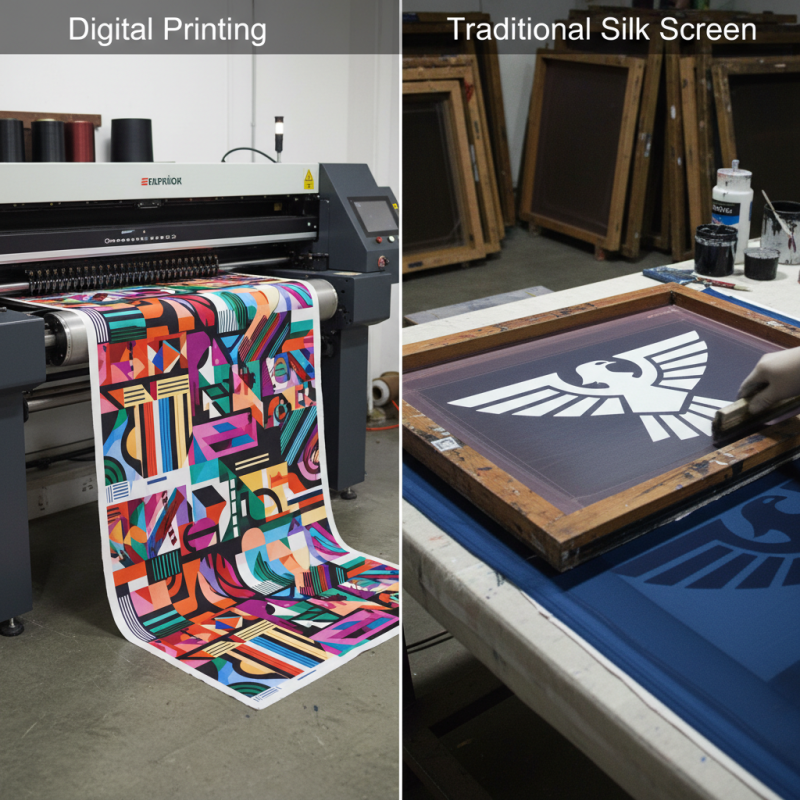
Understanding the Differences Between Digital Printing and Silk Screen
Digital printing and traditional silk screen printing serve different needs in the world of design. Digital printing uses advanced technology to transfer images directly onto materials. This method offers vibrant colors and intricate details. In contrast, silk screen printing requires creating physical stencils. This can make it less suitable for designs with multiple colors.
One of the key differences is turnaround time. Digital printing allows for quick production, ideal for smaller runs or on-demand services. It also reduces waste, as leftover materials are minimized. However, silk screen printing shines in large-scale projects. Its setup costs can be high, but it becomes cost-effective for extensive orders.
Another aspect to consider is the texture and finish. Digital prints tend to have a smooth finish, while silk screen prints can feature a raised texture. The choice depends on aesthetic preferences and the project's goals. Yet, both methods have their limitations. Digital printing may struggle with certain fabric types. Meanwhile, silk screen printing might not accurately replicate highly detailed images. Each method has its place, and it's crucial to weigh the pros and cons based on specific needs.
Comparison of Digital Printing and Traditional Silk Screen Printing
Cost-Effectiveness: Comparing Expenses of Digital and Silk Screen Printing
Digital printing has emerged as a cost-effective alternative to traditional silk screen printing. According to a report by Smithers Pira, the digital printing industry is expected to grow to $29 billion by 2024. This growth reflects its affordability and efficiency compared to traditional methods. Digital printing often incurs lower setup costs, making it viable for short runs and personalized projects.
Silk screen printing, while reliable, involves higher initial expenses. The need for screens and setup time can easily surpass the cost of digital methods. For large-scale projects, silk screen may still be advantageous. However, for orders under 100 pieces, digital printing can save up to 40% in costs. A study by the Printing Industries of America found that businesses can achieve quicker turnaround times with digital options, reducing overhead expenses.
Despite its benefits, digital printing has limitations, such as color matching accuracy and material compatibility. Therefore, it's crucial for businesses to assess their specific needs. An informed decision can lead to significant financial savings and improved efficiency. Balancing quality and cost remains a challenge for many.
Quality and Precision: Evaluating Print Outcomes in Both Methods
Digital printing has rapidly gained traction over traditional silk screen methods, especially in print quality. A study published by Smithers Pira indicated that digital print quality can achieve a resolution of 1200 dpi. This contrasts sharply with traditional silk screen printing, typically maxing out around 300 dpi. Higher resolution means clearer images and finer details.
Precision in color accuracy is another area where digital printing excels. According to a report by the International Digital Enterprise Alliance, digital prints demonstrate a color accuracy rating of over 90%. This level of consistency is vital for brands looking to establish a strong visual identity. On the other hand, silk screen can struggle with color matching, particularly on varied substrates.
When considering these methods, remember a few key tips. First, assess your project’s needs. For intricate designs or small runs, digital is often ideal. Additionally, think about turnaround times. Digital processes can significantly reduce production times compared to silk screen methods. Reflecting on these factors can ensure the best print outcome for your project’s unique needs.
Why Choose Digital Printing Over Traditional Silk Screen? - Quality and Precision: Evaluating Print Outcomes in Both Methods
| Feature |
Digital Printing |
Traditional Silk Screen |
| Setup Time |
Low (Minutes) |
High (Hours) |
| Color Accuracy |
High |
Moderate |
| Design Flexibility |
Excellent |
Limited |
| Order Size |
Short to Medium Runs |
Medium to Large Runs |
| Print Speed |
Fast |
Slower |
| Cost Efficiency |
Best for Small Quantities |
Best for Large Quantities |
| Environmental Impact |
Lower (less waste) |
Higher (more waste) |
Versatility: How Digital Printing Offers More Design Flexibility
Digital printing is revolutionizing the design landscape by offering unprecedented flexibility. Unlike traditional silk screen methods, which often require setup costs and lengthy processes, digital printing allows for quick modifications. This adaptability makes it an attractive choice for businesses seeking to stay current in a fast-paced market. An estimated 57% of printing companies report that digital technology significantly enhances their ability to offer customizations.
Moreover, digital printing supports a broader range of materials and applications. Recent industry surveys indicate that 48% of designers prefer digital printing for its versatility in handling complex graphics. This technology can easily accommodate intricate designs and vibrant colors, giving creators the freedom to explore new ideas without the constraints faced in traditional methods.
Despite its advantages, digital printing is not without challenges. There can be quality variations, especially with different substrates. Additionally, some businesses may hesitate due to the initial investment in technology. These factors highlight the need for careful consideration when transitioning to digital processes. However, the potential for innovation and creativity makes digital printing a compelling option for the modern designer.
Production Speed: Analyzing Turnaround Times for Both Printing Techniques
When considering production speed, digital printing significantly outpaces traditional silk screen methods. Digital printing allows for quicker setup times and faster output. In standard practices, it often takes only a few hours to produce high-quality prints. This efficiency is crucial for businesses needing rapid turnaround.
Silk screen printing involves a more complex process. It requires creating screens for each color, which can increase setup time considerably. Depending on the design, this can mean waiting days for production. Adjusting colors or correcting mistakes may also prolong the process, introducing additional delays. Digital printing bypasses this challenge with its direct-to-media approach. Changes can be made quickly, ensuring customer satisfaction with minimal delays.
However, one must remain cautious. Digital printing may not be the best choice for every project. It often works well for small runs but less so for large volumes. Businesses should weigh their specific needs before making a choice. Assessing both techniques' benefits and limitations is vital to achieve optimal results.
FAQS
: Digital printing transfers images directly, providing vibrant colors. Silk screen printing uses stencils, limiting color options.
Digital printing offers quick production for small runs. Silk screen printing is better for large-scale projects despite longer setup times.
Digital prints usually have a smooth finish, whereas silk screen prints may have a raised texture.
Digital printing allows for quick modifications and supports complex graphics with vibrant colors. It enables greater design flexibility.
Yes, quality can vary, and businesses may face initial technology investment hesitations. Careful consideration is essential.
Silk screen printing is ideal for large orders where setup costs can be offset by production volume.
Yes, digital printing is versatile and accommodates a broader range of materials and applications.
Silk screen printing may not accurately reproduce highly detailed images due to its setup process.
Many designers prefer digital printing for its ability to handle intricate designs and offer customizations easily.
No, digital printing may struggle with certain fabric types, requiring careful selection based on project needs.
Conclusion
Digital printing presents numerous advantages over traditional silk screen printing, making it a preferred choice for many projects. One major factor is cost-effectiveness; digital printing often requires lower initial investments and offers economical options for small print runs, as opposed to the setup costs associated with silk screening. Moreover, in terms of quality and precision, digital printing provides superior results, with sharper images and the ability to reproduce intricate designs accurately.
Versatility is another area where digital printing excels. It allows for greater design flexibility, accommodating a range of colors and personalized designs effortlessly. Additionally, the production speed of digital printing surpasses that of silk screen methods, resulting in quicker turnaround times for delivery. These factors collectively address the question: why is digital printing better than traditional silk screen? Ultimately, digital printing offers a modern solution catering to diverse printing needs efficiently and affordably.
 Imago Printer
